

Development of National Consensus-based Recommendations
for History Taking, Examination and Clinical Management
of Infants in Chiropractic PracticeThis section is compiled by Frank M. Painter, D.C.
Send all comments or additions to: Frankp@chiro.org


FROM: Chiropractic & Manual Therapies 2026 (Aug 22); 34: 39 ~ FULL TEXT
OPEN ACCESS Freja Gomez Overgaard • Lise Hestbæk • Elisabeth Davidson
Medical Spinal Research Unit,
Spine Centre of Southern Denmark,
University Hospital of Southern Denmark,
Sygehusvej 24, 6000, Kolding, Denmark.

Background: Chiropractors in many countries provide care for infants, yet few structured, evidence-informed recommendations exist to guide history taking, examination, and clinical management in this population. In Denmark, variation in practice and limited public understanding of chiropractic care for infants highlighted the need for national recommendations to support safe, consistent, and transparent care.
Objective: To describe the development of national recommendations outlining the minimum requirements for history taking, examination, and clinical management considerations for infants aged 0-12 months in chiropractic practice.
Methods: These recommendations were commissioned by the Danish Society of Chiropractic and initially developed in 2020, with an update in 2025. The manuscript was reported with consideration of the RIGHT Statement. Recommendation development was informed by a targeted literature review, a national knowledge-sharing workshop involving 71 chiropractors, expert review by a seven-member panel with extensive paediatric experience, and external stakeholder consultation. Feedback from each stage was incorporated through an iterative drafting process.
Results: The recommendations describe minimum requirements for medical history taking, red flag screening, general and musculoskeletal examination, referral, and clinical management considerations for infants. Minimum and supplementary assessment components are presented in structured tables to support consistent clinical assessment and decision-making.
Conclusions: These national recommendations establish minimum requirements for history taking, examination, and clinical management considerations for infants in chiropractic practice. Developed through a structured process integrating a targeted literature review, practice-based input, expert review, and stakeholder consultation, they provide a transparent and practical framework to support safe, consistent, and collaborative paediatric care. Transparent reporting of the development process may facilitate the adaptation of these recommendations and the development of similar recommendations in other healthcare settings.
Keywords: Chiropractic; Clinical guidelines; History taking; Infants; Manual therapy; Musculoskeletal assessment; Pediatrics; Physical examination.
From the Full-Text Article:
Background
This project was commissioned by the Danish Society of Chiropractic to develop national recommendations for the history taking, examination, and clinical management of infants aged 0–12 months in Danish chiropractic practice. These recommendations aim to support safe, consistent, and transparent clinical care while facilitating communication with parents and other healthcare professionals.
Infants represent a regular patient group in Danish chiropractic practice. In 2018, children younger than one year accounted for approximately 3.5% of all patients seen by Danish chiropractors, corresponding to around 13,000 consultations annually, although considerable variation exists between individual practitioners. [1, 2]
The reasons for seeking chiropractic care are relatively consistent across Scandinavia and other Western countries. Danish and Norwegian studies have shown that infantile colic or excessive crying, asymmetrical movement patterns, musculoskeletal concerns, breastfeeding difficulties, and sleep disturbances are among the most common reasons parents seek chiropractic care for infants. [1, 2] Similar findings have been reported in Norway [3] and elsewhere in Europe [4], suggesting that the clinical presentations of infants in chiropractic practice are broadly comparable across healthcare systems.
Although these presenting complaints are common, many are non-specific and may reflect a broad spectrum of underlying conditions, ranging from benign musculoskeletal dysfunction to serious medical pathology. [5] Consequently, a thorough medical history and physical examination are essential to identify children requiring referral while ensuring that those appropriate for conservative care receive consistent assessment and management. [5, 6]
Despite infants representing an important patient population in chiropractic practice, there is limited published guidance describing the minimum requirements for their assessment. Existing publications primarily describe patient characteristics and presenting complaints [1, 3, 4], broader best-practice recommendations for paediatric chiropractic care [6, 7], or evidence relating to individual treatment approaches. [8–10] However, practical recommendations specifically describing the minimum requirements for history taking, physical examination, recognition of red flags, referral, and subsequent clinical management of infants in chiropractic practice remain limited.
The present recommendations were therefore developed by integrating current evidence, structured practice-based input, expert review, and external stakeholder consultation. Transparent reporting of the development process may facilitate adaptation of similar recommendations in other countries and clinical settings where high-quality evidence remains limited and recommendations must therefore integrate research evidence with structured clinical expertise. [11]
The aim of this project was to describe the development of national recommendations outlining the minimum requirements for history taking, examination, and clinical management considerations for infants (0–12 months) in Danish chiropractic practice.
Methods
Study design and framework
This manuscript describes the development of national recommendations for the history taking, examination, and clinical management of infants aged 0–12 months in chiropractic practice. The recommendations were commissioned by the Danish Society of Chiropractic and were initially developed in 2020 before being updated in 2025. The reporting of this manuscript was informed by the RIGHT Statement to improve transparency and completeness of reporting [7] (Supplementary file 1).
Setting
The recommendations were developed for use in Danish chiropractic practice. In 2018, infants aged 0–12 months represented approximately 3.5% of all patients seen by Danish chiropractors, corresponding to approximately 13,000 consultations annually.
National knowledge-sharing workshop
A national workshop on infant chiropractic care was organised by the Danish Society of Chiropractic and attended by 71 chiropractors with a special clinical interest in paediatrics.
The workshop consisted of invited presentations followed by facilitated small-group discussions and plenary sessions. Participants were encouraged to discuss clinical experiences, identify important elements of history taking and examination, highlight areas of uncertainty, and suggest additional considerations relevant to clinical practice. The purpose of the workshop was to gather practice-based knowledge and clinical perspectives rather than to achieve formal consensus.
Notes from all discussion groups were synthesised by the authors and circulated to all participants following the workshop to verify that the discussions had been accurately represented and to allow additional comments. No further comments were received. The verified workshop summary informed subsequent revisions of the recommendations.
Literature review
The initial recommendations were developed through a combination of existing clinical expertise and a targeted review of the scientific literature. A literature search was conducted in PubMed without restrictions on publication year to identify evidence relevant to infants aged 0–12 months. The review focused on studies relating to medical history taking, physical and musculoskeletal examination, red flags, referral, and clinical management relevant to chiropractic practice.
The purpose of the literature review was to identify and summarise the available evidence to inform the recommendations rather than to undertake a formal systematic review. Studies were included if they informed one or more aspects of history taking, examination, referral, or management of infants relevant to chiropractic practice. No formal exclusion criteria were predefined because the purpose was to identify literature relevant to recommendation development rather than undertake a systematic evidence synthesis. The references cited throughout the manuscript represent the principal evidence sources underpinning the recommendations.
Recommendations concerning general medical history taking and physical examination were based primarily on a Danish paediatric medical textbook [5] and were considered alongside previously published international consensus recommendations describing best practice for chiropractic care of children. [3] Recommendations relating to musculoskeletal assessment and management were developed through the subsequent expert review process.
Expert review and recommendation development
Following the workshop, an expert panel consisting of seven Danish chiropractors with extensive experience in paediatric chiropractic practice was convened. The panel had a mean age of 42 years (range 30–65 years) and an average of approximately 20 years of clinical experience. Panel members represented different regions of Denmark and had expertise in paediatric chiropractic practice or paediatric musculoskeletal research.
The expert panel did not develop the recommendations de novo. Instead, panel members critically reviewed successive drafts of the recommendations throughout the development process. During the first review round, panel members were asked to evaluate the overall structure, scope, completeness, and clinical relevance of the recommendations. Following revision, a second review round focused on section-specific feedback, clarity of wording, and clinical applicability.
Feedback was provided in both written and verbal form. All comments from the expert panel and the national workshop were reviewed jointly by the first and senior author. The first and senior author jointly reviewed all feedback received throughout the development process. Comments were discussed and incorporated where they improved clarity, clinical relevance, or consistency with the overall purpose of the recommendations. Final editorial decisions were made by the first author.
External consultation
The revised draft recommendations were distributed by the Danish Society of Chiropractic for external consultation to relevant professional and healthcare organisations, including the Danish Chiropractic Association, the Danish Health Authority, the Danish College of General Practitioners, the Danish Midwives Association, the Danish Society of Health Visitors, and the Danish Paediatric Society.
Stakeholders were invited to provide written feedback on the content, relevance, and applicability of the recommendations. All comments received during the consultation were reviewed jointly by the first and senior author and considered for incorporation into the final recommendations. Revisions were made where comments improved clarity, accuracy, or clinical applicability while maintaining the overall scope and purpose of the recommendations.
Results

Table 1 The development process resulted in a set of national consensus-based recommendations covering five main areas: medical history, general physical examination, musculoskeletal examination, recognition of red flags and referral, and management considerations following assessment. The minimum and supplementary assessment components are summarised in Tables 1–6, followed by overarching management principles and considerations for common clinical presentations.
Medical history (anamnesis)
Parents know their child better than anyone and their observations and concerns should therefore be taken seriously. During history taking, the chiropractor should observe the infant’s general condition, including whether the infant is awake, attentive, responsive, and visually engaged. The chiropractor should sit at eye level with the parent, with the infant preferably held by the parent or seated on the parent’s lap. [12]
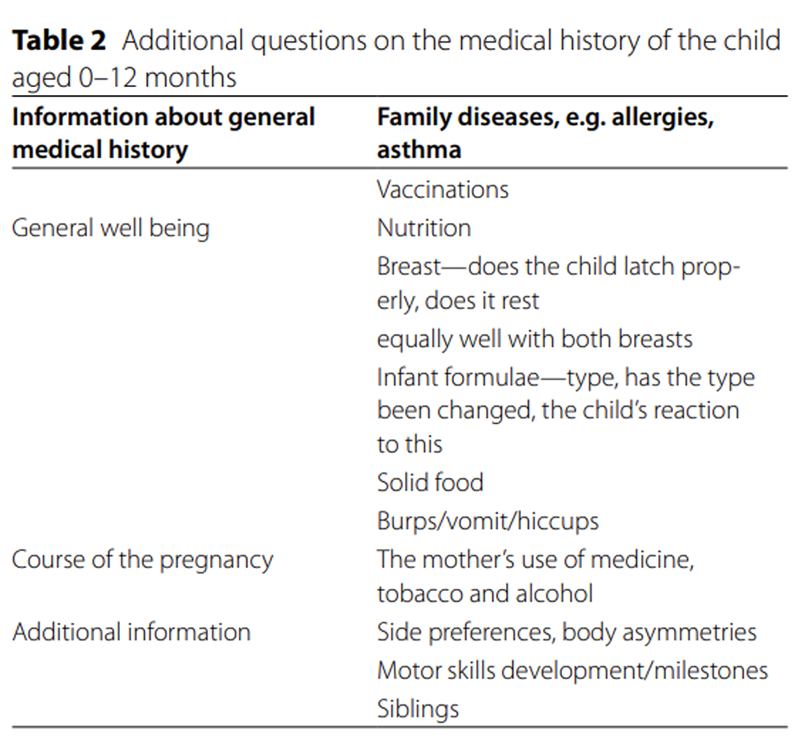
Table 2 The medical history for an infant aged 0–12 months should include, as a minimum, the domains listed in Table 1. Parents should be informed that questions about pregnancy, birth, feeding, sleep, crying, development, and general welfare are asked to understand the overall context for the consultation, and not necessarily to imply a causal relationship between these factors and the infant’s symptoms. Additional history-taking items should be included when clinically relevant, as showed in Table 2.
General examination
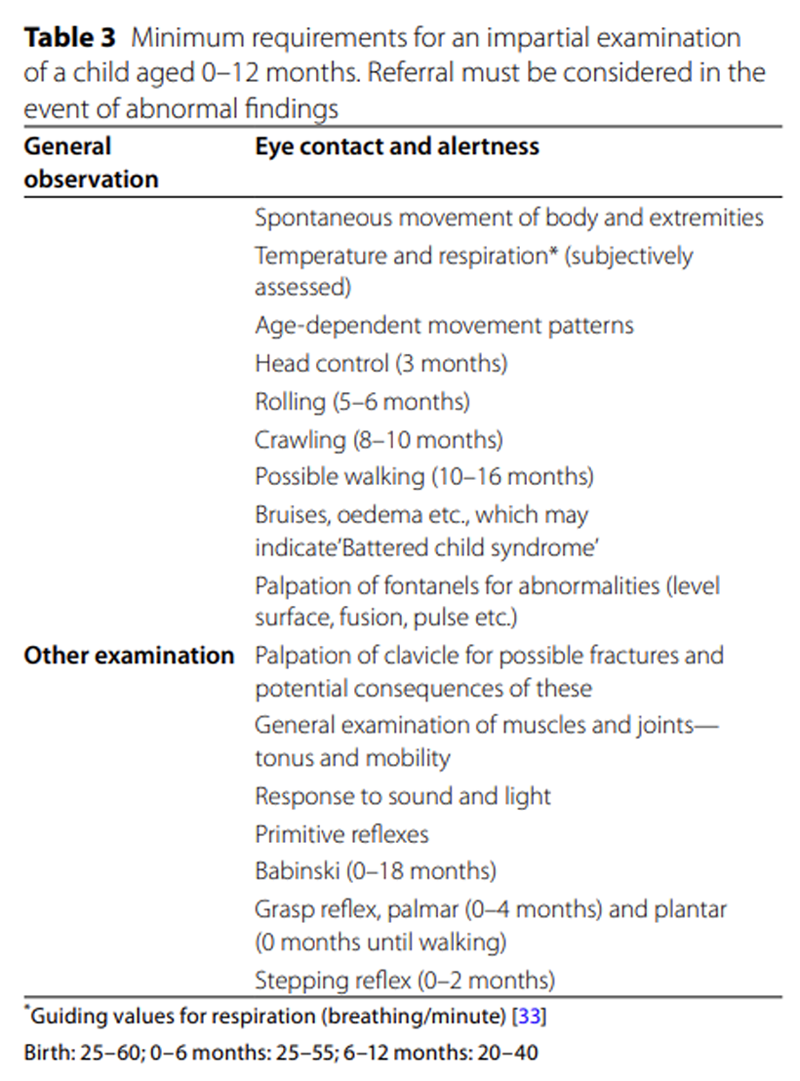
Table 3 The first part of the physical examination should focus on the infant’s general health and on identifying signs of serious illness or other findings requiring referral. The examination should be explained to the parents in clear and understandable language, and parents should be invited to assist where appropriate. Instruments, such as a stethoscope, should be warm before use, and the most uncomfortable parts of the examination should be left until last. The infant should be undressed sufficiently to allow a thorough examination, while ensuring that the child does not become cold. [12]
The chiropractor should allow time to comfort the infant when necessary, while avoiding an unnecessarily prolonged examination. Minimum requirements for the general examination of infants aged 0–12 months are shown in Table 3.
Musculoskeletal examination
Table 4
Table 5
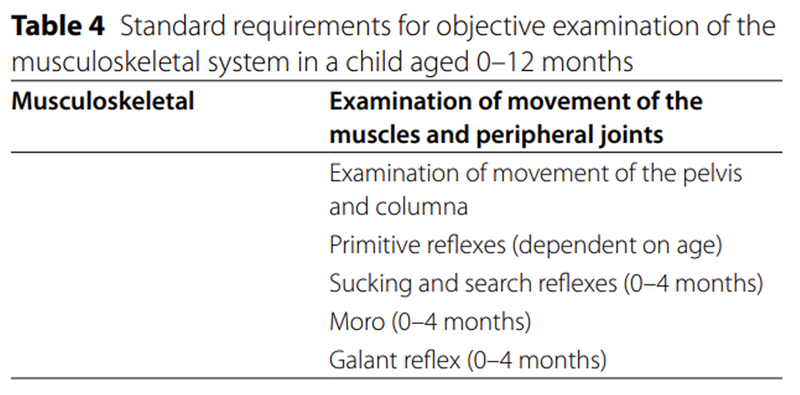
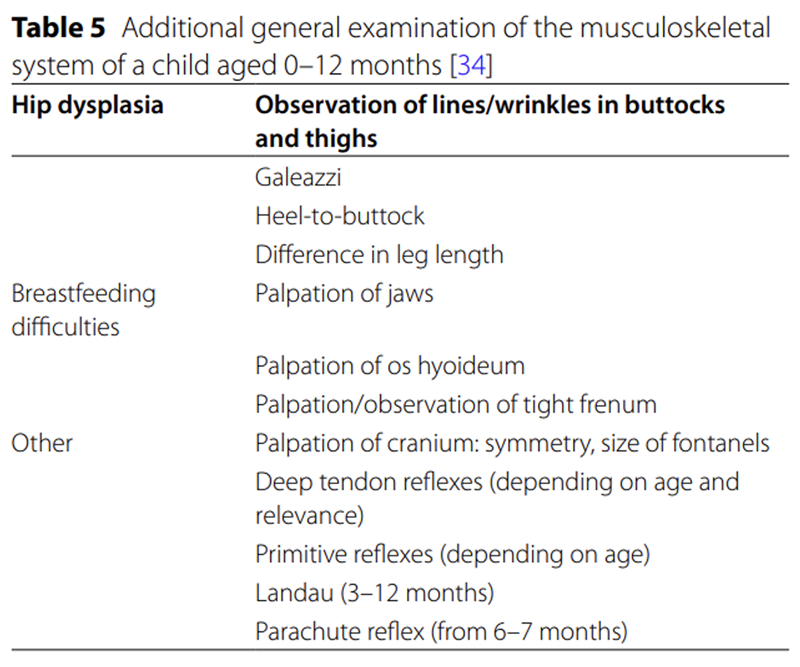
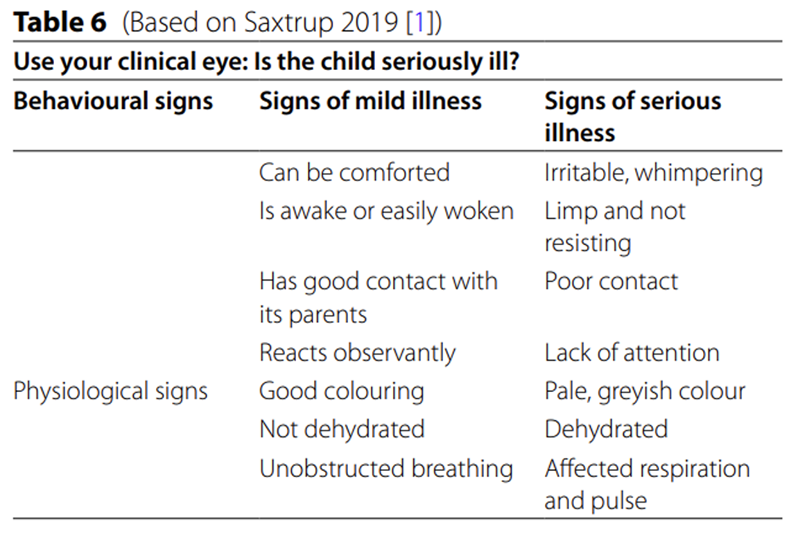
Table 6 When the history and general examination do not indicate serious illness or other findings requiring urgent referral, the chiropractor may proceed to a more detailed musculoskeletal examination. This part of the examination should assess movement, tone, symmetry, and age-appropriate neuromusculoskeletal function.
The minimum requirements for examination of the musculoskeletal system are presented in Table 4. Additional examination procedures may be included based on the infant’s presentation, parental concerns, and clinical suspicion, as outlined in Table 5.
Red flags and referral
The history and examination should be used to identify signs of serious illness, developmental concerns, trauma, safeguarding concerns, or other findings requiring referral or interdisciplinary collaboration. Fever in an infant younger than three months, defined as a rectal temperature of 38.0 °C or higher, should be regarded as a potential sign of serious illness and requires immediate assessment by the child’s general practitioner, emergency department, or other appropriate medical service. [10]
Older infants with signs of serious illness should also be referred, as outlined in Table 6. Febrile infants should be assessed for petechiae, neck or back stiffness, and, where relevant, a tense fontanel. Important differential diagnoses in febrile infants include airway infections, otitis media, childhood viral illnesses, gastroenteritis, appendicitis, urinary tract infections, meningitis, and encephalitis.
In infants, viral infections may be accompanied by a finely spotted rash. However, meningococcal disease is an important differential diagnosis in infants presenting with fever or rash. In cases of possible meningitis or encephalitis, symptoms and objective findings may be non-specific. The chiropractor should therefore pay close attention to parental concerns about even subtle changes in the infant’s behaviour, including whether the child is apathetic, unusually drowsy, irritable, difficult to comfort, vomiting, convulsing, or presenting with rash, petechiae, or other skin bleeding.
Petechiae are small bleedings in the skin that do not disappear under pressure. In meningococcal disease, petechiae are often bluish-red, irregular in shape, variable in size, and may be distributed across the face, trunk, and extremities. Viral illness may also be associated with small pink petechiae, particularly above the nipple line and following coughing or vomiting; if the infant is otherwise well, this is less suggestive of meningococcal disease.
If inflicted harm or neglect is suspected, the chiropractor must act in accordance with national safeguarding legislation and inform the appropriate authorities.
Management considerations following assessmentInformation and counselling
Information and counselling are central components of the chiropractic consultation. The content of counselling should be guided by the infant’s presentation, the findings from the history and examination, and the level of parental concern. Counselling may include advice about positioning, movement, motor development, handling, and exercises. A broader health perspective should also be considered where relevant, including advice consistent with public health recommendations.
Manual care
Manual care refers to treatment administered with the hands and may be directed towards muscles, joints, or movement function. In infants, any manual approach must be adapted to the infant’s age, size, developmental stage, clinical condition, and tolerance. Because the infant musculoskeletal system differs substantially from that of adults, any manual procedures must be considerably gentler than those used in adult care.
Manual care may include mobilisation, low-force techniques, or manipulation. Manipulation, or spinal manipulative therapy, is commonly defined as a high-velocity, low-amplitude impulse directed at a spinal segment, whereas mobilization refers to manual force applied within the passive range of motion without impulse or cavitation. [11]
In infants, such procedures must be substantially modified. Based on studies of the tensile strength of the vertebral column in different age groups, it has been suggested that manipulation in infants younger than four weeks should use no more than 10% of the force used in adults, and up to 30% for infants aged 2–23 months. [12]
Adverse events and safety considerations
Parents should be informed about possible adverse events to support informed consent and to reduce unnecessary concern following treatment. Existing reviews suggest that transient symptoms such as fatigue, irritability, local redness, or discomfort may occur, whereas serious complications appear to be very rare and are most often related to delayed diagnosis rather than the manual intervention itself. [6, 13–15]
This reinforces the importance of careful history taking, thorough examination, and appropriate referral when serious pathology is suspected.
Data from compensation claims in Denmark and Norway from 2004 to 2012, and from Australian insurance data up to July 2019, did not identify compensation claims involving children in chiropractic practice. [16, 20]
General management principles
Current evidence for manual treatment of infants remains limited, particularly for specific infant complaints. Clinical decisions should therefore be based on evidence-informed practice, integrating the best available evidence, clinical expertise, the findings from the individual assessment, parental preferences, and careful monitoring of response to care. [6]
Where there are clinical indications for manual care, no signs of serious disease or anomaly, and parents have received sufficient information to provide informed consent, a time-limited trial of care may be considered. The infant should be monitored closely for response and possible adverse events. If symptoms or function do not improve within a short period, generally within two weeks unless specific circumstances justify a longer period, the management strategy should be reconsidered and referral or interdisciplinary collaboration should be considered.
Communication with the infant’s general practitioner or other healthcare providers is particularly important when serious pathology is suspected, when the infant has been referred by another healthcare provider, or when care is concluded with a recommendation for further assessment or management elsewhere.
Common clinical presentations
The following sections illustrate how the recommendations may be applied in three common presentations encountered in chiropractic practice. They are intended as examples of the clinical reasoning underpinning the recommendations rather than comprehensive evidence reviews or condition-specific management guidelines.
Infantile colic
Infantile colic is one of the common reasons parents seek chiropractic care for infants. It is defined by an abnormal crying pattern and may have several underlying or contributing causes. The assessment should therefore focus on identifying signs of serious illness, feeding problems, cow’s milk protein allergy, parent-infant interaction difficulties, and possible musculoskeletal findings that may be relevant to the infant’s discomfort.
The evidence for manual treatment of infantile colic remains uncertain. Controlled studies have reported mixed findings, and the available studies are generally limited by small sample sizes and challenges related to blinding. [17–21] A trial of manual care may be considered only when the history and examination indicate a possible musculoskeletal contribution, there are no signs of serious disease or anomaly, and the parents have been appropriately informed.
Assessment should also include attention to the interaction between the infant and parents, as difficulties in interpreting infant cues may contribute to crying and parental distress. [22] Where relevant, collaboration with health visitors, general practitioners, or other healthcare professionals should be initiated. If cow’s milk protein allergy is suspected, further assessment and management should be undertaken in collaboration with the general practitioner or health visitor. [24–26]Probiotics may be considered as an alternative or supplement where symptoms appear related to the gastrointestinal system, although the evidence remains limited and heterogeneous. [17, 19, 27]
Asymmetry
Parents may seek chiropractic care because of asymmetry, such as a preferred side when sleeping or breastfeeding, reduced cervical range of motion, or positional cranial asymmetry. The assessment should focus on identifying whether the asymmetry reflects normal variation, positional preference, musculoskeletal restriction, developmental concerns, or signs requiring referral.
There is limited direct evidence regarding manual care for infant asymmetry. However, clinical assessment may identify reduced movement or functional asymmetry where advice, exercises, positioning strategies, or a time-limited trial of manual care may be considered. Manual care should only be considered when the history and examination indicate a possible musculoskeletal contribution and there are no signs of serious disease or anomaly. Parents should be counselled about positioning and exercises to counteract positional cranial deformation where relevant. [28, 29]
Breastfeeding difficulties
Breastfeeding difficulties may have multiple causes and often require timely assessment to avoid early cessation of breastfeeding. Chiropractic assessment should focus on whether musculoskeletal findings, such as reduced cervical movement, jaw tension, or functional asymmetry, may contribute to difficulty latching or feeding. At the same time, the chiropractor should consider whether referral to, or collaboration with, appropriately trained breastfeeding professionals is indicated.
There is limited controlled evidence regarding manual care for breastfeeding difficulties. Case series have reported improvements in latch following manual therapy, but stronger evidence is lacking. [30] A time-limited trial of care may be considered when the history and examination indicate a possible musculoskeletal contribution, there are no signs of serious disease or anomaly, and parents are appropriately informed. If there are no musculoskeletal findings, or if there is no rapid improvement within approximately one week, the mother and infant should be referred to a qualified breastfeeding advisor, such as a midwife, health visitor, or International Board Certified Lactation Consultant, particularly if breastfeeding is at risk. [31]
Discussion
This manuscript describes the development of the first national recommendations for history taking, examination, and clinical management considerations for infants in Danish chiropractic practice. The recommendations were developed in response to the absence of practical guidance specifically addressing the assessment of infants in chiropractic care and aim to promote a structured, transparent, and consistent approach to clinical assessment and management. By defining minimum requirements for history taking, physical examination, recognition of red flags, and referral, the recommendations seek to support patient safety while facilitating communication with parents and other healthcare professionals.
Comparison with existing frameworks and literature
Previous publications have described the characteristics of children presenting to chiropractic practice and the most common reasons for consultation. [1, 3, 4] Broader best-practice recommendations for paediatric chiropractic care have also been published through international expert consensus. [6, 7] More recently, standardized paediatric history and examination forms have been published to support structured clinical assessment in chiropractic practice. [21] However, to our knowledge, no previous publication has specifically described the development of practical recommendations outlining the minimum requirements for history taking, physical examination, recognition of red flags, referral, and subsequent clinical management for infants in chiropractic practice.
Although these recommendations were developed for the Danish healthcare system, the development process may also be relevant internationally. Many countries face similar challenges, where clinicians must integrate limited research evidence with clinical expertise when managing infants presenting with non-specific complaints. Transparent reporting of recommendation development may therefore facilitate adaptation to other healthcare systems while allowing recommendations to be modified according to local legislation, referral pathways, and professional scope of practice.
Strengths and limitations
Several methodological strengths support the credibility of these recommendations. First, the recommendations were informed by multiple complementary sources, including a targeted literature review, structured practice-based input from a national workshop involving 71 chiropractors with a special interest in paediatric care, expert review by seven experienced paediatric chiropractors, and external consultation with relevant professional and healthcare organisations. Together, these components ensured that the recommendations were informed by both available evidence and extensive clinical experience. Second, the development process included several iterative review stages, allowing recommendations to be refined following workshop discussions, expert review, and stakeholder consultation. This iterative approach strengthened the clinical relevance, clarity, and feasibility of the final recommendations. Finally, the manuscript has been reported with consideration of the RIGHT Statement [11], improving transparency in describing the recommendation development process and facilitating future adaptation or updating.
Several limitations should also be acknowledged. First, the literature review informing the recommendations was targeted rather than systematic. Consequently, although relevant evidence was identified and incorporated, it is possible that some studies were not identified. Second, the evidence supporting chiropractic assessment and management of infants remains limited. For several recommendations, particularly those relating to clinical management, evidence from high-quality clinical trials is sparse. [8–10] Clinical expertise therefore necessarily played an important role in the development process. Third, although expert review and external consultation were used to refine the recommendations, no formal consensus methodology, such as a Delphi process or nominal group technique, was employed. Consequently, these recommendations should be viewed as expert-informed recommendations rather than formal consensus guidelines. Finally, the recommendations were developed within the Danish healthcare system and therefore reflect Danish legislation, referral pathways, and professional responsibilities. Adaptation may therefore be required before implementation in other healthcare settings.
Implications for clinical practice
These recommendations provide chiropractors with a structured framework for the assessment of infants presenting to chiropractic practice. By defining minimum standards for history taking, physical examination, recognition of red flags, referral, and subsequent clinical management, they may contribute to greater consistency in clinical practice while supporting early recognition of infants requiring medical referral. The recommendations may also facilitate communication between chiropractors, parents, and other healthcare professionals by providing a transparent description of the clinical assessment process.
Implications for future research
Future research should evaluate the implementation and uptake of these recommendations within clinical practice and explore their influence on clinical decision-making, referral behaviour, interprofessional collaboration, and parent experiences. As the evidence base continues to develop, future updates should incorporate emerging evidence, particularly regarding the effectiveness and safety of manual care for common infant presentations such as infantile colic, asymmetry, and breastfeeding difficulties. Similar recommendation development processes may also be undertaken in other countries to facilitate context-specific adaptation while improving consistency in paediatric chiropractic practice.
Conclusion
These national recommendations establish minimum requirements for history taking, examination, and clinical management considerations for infants in chiropractic practice. Developed through a structured process integrating a targeted literature review, practice-based input, expert review, and external stakeholder consultation, they provide a transparent and practical framework to support safe, consistent, and collaborative paediatric care. The transparent reporting of the development process may also facilitate the adaptation and development of similar recommendations in other healthcare settings.
Supplementary MaterialSupplementary Material 1 RIGHT Checklist
Acknowledgements
We acknowledge the seven-member expert group who contributed to the original development of the recommendation, as well as the 71 Danish chiropractors who participated in the structured knowledge-sharing workshop and provided practice-based input that informed the musculoskeletal recommendations. We also extend our appreciation to the members of the Danish Chiropractic Association, the Danish Health Authority, the Danish Society for General Practice, the Danish Midwife Association, the Danish Society of Public Health, and the Danish Pediatric Society for their valuable feedback during the consultation phase.
Funding
This research received no specific grant from any funding agency in the public, commercial, or not-for-profit sectors.
Contributions
FGO: Conceptualization, methodology, original draft preparation, recommendation development and review, review and editing.
LH: Conceptualization, methodology, recommendation development and review.
ED: Recommendation development and review, review and editing. All authors read and approved the final manuscript.
Competing interestc
The authors declare that they have no competing interest.Abbreviations
°C: = Degrees Celsius
GP: = General practitioner
IBCLC: = International board-certified lactation consultant
PICO: = Patient/problem, intervention, comparison, outcome
RIGHT: = Reporting items for practice guidelines in healthcare
WHO: = World health organization
References:
N Saxtrup 2019
Subjektivt & objektivt: anamnese, undersøgelse og journal 4. udgave, 1.
oplag Munksgaard KøbenhavnC Hawk MJ Schneider S Vallone EG Hewitt 2016
Best Practices for Chiropractic Care of Children:
A Consensus Update
J Manipulative Physiol Ther. 2016 (Mar); 39 (3): 158–168L Hestbaek A Jørgensen J Hartvigsen 2009
A Description of Children and Adolescents in Danish
Chiropractic Practice: Results from a Nationwide Survey
J Manipulative Physiol Ther. 2009 (Oct); 32 (8): 607–615A Allen-Unhammer FJH Wilson L Hestbaek 2016
Children and Adolescents Presenting to Chiropractors in Norway:
National Health Insurance Data and a Detailed Survey
Chiropractic & Manual Therapies 2016 (Aug 1); 24: 29AM Marchand 2012
Chiropractic Care of Children from Birth to Adolescence
and Classification of Reported Conditions: An Internet
Cross-Sectional Survey of 956 European Chiropractors
J Manipulative Physiol Ther. 2012 (Jun); 35 (5): 372–380G Keating L Amorin-Woods 2023
Commentary on the 2019 Safer Care Victoria review
Chiropr J Aust 50 1 52Y Chen K Yang A Marušic 2017
A reporting tool for practice guidelines in health care: the RIGHT statement
Ann Intern Med 166 2 128 132
https://doi.org/10.7326/M16-1565MC Brouwers ME Kho GP Browman 2010
AGREE II: advancing guideline development, reporting and evaluation in health care
CMAJ 182 18 E839 E842
https://doi.org/10.1503/cmaj.090449Qaseem A, Forland F, Macbeth F, Ollenschläger G, Phillips S, van der Wees P; Board of Trustees of the Guidelines International Network.
Guidelines International Network: toward international standards for clinical practice guidelines.
Ann Intern Med. 2012;156(7):525–31Fever Symptoms & Treatment (for Parents) [Internet].
[cited 2025 Apr 16]. Available from:
https://kidshealth.org/en/parents/fever.htmlG Bronfort M Haas RL Evans LM Bouter 2004
Efficacy of Spinal Manipulation and Mobilization
for Low Back Pain and Neck Pain: A Systematic
Review and Best Evidence Synthesis
Spine J (N American Spine Soc) 2004 (May); 4 (3): 335–356AM Marchand 2015
A Proposed Model With Possible Implications
for Safety and Technique Adaptations for
Chiropractic Spinal Manipulative Therapy
for Infants and Children
J Manipulative Physiol Ther 2015 (Nov); 38 (9): 713–726S Vohra BC Johnston K Cramer K Humphreys 2007
Adverse Events Associated with Pediatric
Spinal Manipulation: A Systematic Review
Pediatrics. 2007 (Jan); 119 (1): e275–e283F Driehuis TJ Hoogeboom MWG Nijhuis-van der Sanden RA De Bie JB Staal 2019
Spinal manual therapy in infants, children and adolescents: a systematic review and meta-analysis on treatment indication, technique and outcomes
PLoS ONE 14 6
e0218940https://doi.org/10.1371/journal.pone.0218940AJ Todd MT Carroll A Robinson EKL Mitchell 2015
Adverse Events Due to Chiropractic and Other
Manual Therapies for Infants and Children:
A Review of the Literature
J Manipulative Physiol Ther. 2015 (Nov); 38 (9): 699–712J Jevne J Hartvigsen HW Christensen 2014
Compensation claims for chiropractic in Denmark and Norway 2004–2012
Chiropr Man Ther 22 1 37
https://doi.org/10.1186/s12998-014-0037-5R Perry V Leach C Penfold P Davies 2019
An Overview of Systematic Reviews of Complementary
and Alternative Therapies for Infantile Colic
Systematic Reviews 2019 (Nov 11); 8 (1): 271LV Holm W Vach DE Jarbøl HW Christensen J Søndergaard L Hestbæk 2021
Identifying Potential Treatment Effect Modifiers of the
Effectiveness of Chiropractic Care to Infants with
Colic Through Prespecified Secondary Analyses
of a Randomised Controlled Trial
Chiropractic & Manual Therapies 2021 (Apr 19); 29: 16SR Vaz MH Tofoli MAG Avelino PSS Costa Da 2024
Probiotics for infantile colic: Is there evidence beyond doubt? a meta-analysis and systematic review
Acta Paediatr 113 2 170 182
https://doi.org/10.1111/apa.16736D Carnes A Plunkett J Ellwood C Miles 2018
Manual therapy for unsettled, distressed and excessively crying infants: a systematic review and meta-analyses
BMJ Open 8 1 e019040
https://doi.org/10.1136/bmjopen-2017-019040D Dobson PL Lucassen S Sampler 2003
Manipulative Therapies for Infantile Colic
Cochrane Database Syst Rev. 2012 (Dec 12); 12: CD004796DM Zeifman J-R St 2017
Parenting the crying infant
Curr Opin Psychol 15 149 154
https://doi.org/10.1016/j.copsyc.2017.03.012Underretningspligt [Internet]. [cited 2025 Apr 16]. Available from:
https://www.sm.dk/arbejdsomraader/boern-og-unge-i-udsatte-
positioner/underretningspligtDC Estep A Kulczycki 2000
Colic in breast-milk-fed infants: treatment by
temporary substitution of neocate infant formula
Acta Paediatr 2000 (Jul); 89 (7):7 95-802.I Jakobsson L Lothe D Ley MW Borschel 2000
Effectiveness of casein hydrolysate feedings in infants with colic
Acta Paediatr 89 1 18 21
https://doi.org/10.1111/j.1651-2227.2000.tb01190.xL Lothe T Lindberg 1989
Cow’s milk whey protein elicits symptoms of infantile colic in colicky formula-fed infants: a double-blind crossover study
Pediatrics 83 2 262 266
https://doi.org/10.1542/peds.83.2.262R Nocerino F Filippis De G Cecere A Marino M Micillo C Scala Di 2020
The therapeutic efficacy of Bifidobacterium animalis subsp. lactis BB-12® in infant colic: a randomised, double blind, placebo-controlled trial
Aliment Pharmacol Ther. 51 1 110 20CJ Fludder BG Keil 2021
Deformational plagiocephaly and reduced cervical range of motion: a pediatric case series in a chiropractic clinic
Altern Ther Health Med 27 6 26 32Skævt hoved hos spædbørn - Patienthåndbogen på sundhed.dk [Internet].
[cited 2025 Apr 16]. Available from:
https://www.sundhed.dk/borger/patienthaandbogen/boern/sygdomme/
knogler-og-led/skaevt-hoved-hos-spaedboern/C Parnell Prevost B Gleberzon B Carleo K Anderson M Cark KA Pohlman 2019
Manual Therapy for the Pediatric Population:
A Systematic Review
BMC Complement Altern Med. 2019 (Mar 13); 19 (1): 60R Chowdhury S Khoury J Leroux R Alsayegh CM Lawlor ME Graham 2024
Alternative therapies for ankyloglossia-associated breastfeeding challenges: a systematic review
Breastfeed Med 19 7 497 504
https://doi.org/10.1089/bfm.2023.0269WHO Growth Charts [Internet]. [cited 2025 Apr 16]. Available from:
https://www.cdc.gov/growthcharts/who-growth-charts.htmThe Royal Children’s Hospital:
The Royal Children’s Hospital [Internet]. [cited 2025 Apr 16].
Available from: https://www.rch.org.au/home/Pediatric Neurologic Examination
Videos & Descriptions: 3 Month Old [Internet].
[cited 2025 Apr 16]. Available from:
https://neurologicexam.med.utah.edu/pediatric/html/03month.html#11
Return to PEDIATRICS
Return to PEDIATRICS GUIDELINES
Since 8-23-2026
| Home Page | Visit Our Sponsors | Become a Sponsor |
Please read our DISCLAIMER |